One-to-one vs group online guitar classes: which is right for you?
Compare one-to-one and group online guitar classes by feedback, pace, confidence, scheduling and learning goals before choosing the format that fits you.
August 20265 min read
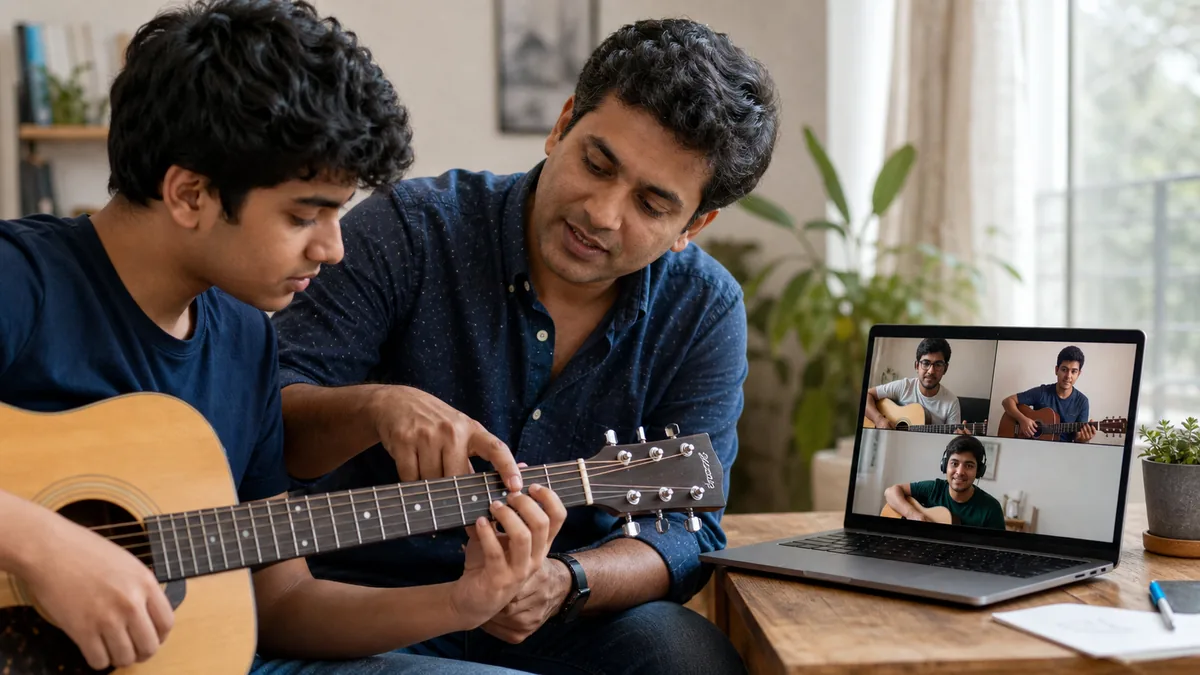
Choosing an online guitar class is not only about finding a good teacher. The class format also changes how you learn. In a one-to-one lesson, every correction and exercise can be shaped around you. In a group class, you learn alongside other students and share the lesson time.
Neither format is automatically better. The right choice depends on your current level, confidence, schedule, budget and the kind of support you need to keep practising. This comparison will help you decide without assuming that every beginner learns in the same way.
What happens in a one-to-one online guitar class?
A one-to-one class gives one student the teacher's full attention for the session. The teacher can watch both hands, stop when something sounds unclear and adjust the lesson immediately. If chord changes are the main challenge, more time can go there. If rhythm is improving quickly, the lesson can move forward instead of waiting for a fixed group plan.
This personal pace is particularly useful when the learner has a specific goal, such as singing while playing, learning electric-guitar technique, preparing selected pieces or returning to guitar after a long break.
What happens in a group online guitar class?
A group class follows a shared plan. Students usually work on the same technique, rhythm exercise or song section together. The teacher still gives feedback, but the available attention is divided across the group.
The group can add energy and accountability. Hearing another beginner work through the same difficulty can make mistakes feel normal. It can also create a regular social routine around music, which some students find easier to maintain than practising alone.
The biggest difference is the amount of personal feedback
Guitar technique is physical. A note may buzz because a finger is too far from the fret, a chord change may be late because one finger is leading in the wrong order, or a strumming pattern may sound uneven because the hand stops moving between strokes.
In a private lesson, the teacher can spend several minutes diagnosing one of those details. In a group, the correction needs to help the class keep moving. Students who need frequent technical adjustments often benefit from more individual attention, especially during the first stage of learning.
Compare the learning pace
One-to-one lessons can move at the learner's pace. A difficult topic can be repeated without pressure, while familiar material can be covered quickly. The roadmap can also change when musical interests evolve.
Group lessons need a common pace. This works well when students begin at a similar level and practise with reasonable consistency. It becomes harder when one student misses several sessions or another progresses much faster than the rest.
- Choose one-to-one if you want the lesson speed adjusted around your progress.
- Consider a group if you enjoy learning with peers and are comfortable following a shared sequence.
- Ask how the teacher handles different progress levels before joining a batch.
- Check whether missed group lessons can be reviewed through notes or practice material.
Think about confidence and learning style
Some beginners feel more comfortable making mistakes privately. They ask more questions and play more freely when only the teacher is listening. Others enjoy the encouragement of a group and become more motivated when everyone is working toward a common piece.
There is no correct personality type for learning guitar. Be honest about the setting in which you are most likely to participate. A cheaper or more flexible class has little value if you regularly stay silent when you are confused.
Which format works better for a busy schedule?
Private lessons often allow more scheduling flexibility because only the teacher and one student need to agree on a time. This can suit working professionals whose meetings or travel make a fixed weekly slot difficult.
A group class normally runs at a fixed time so the batch can stay together. That routine can be helpful if you want a protected weekly commitment, but it may be less forgiving when work or family plans change frequently.
Explore guitar classes designed for working professionals
Compare value, not only the fee
Group classes commonly spread the teacher's time across several learners, while private lessons reserve that time for one student. Instead of comparing only the fee per session, consider how much feedback you receive, whether the pace suits you and how likely you are to continue practising.
A format that helps you correct mistakes, finish songs and stay consistent may offer better value than one you attend without fully participating. Review the available formats and ask what is included before making a decision.
View Jam And Play class formats and current pricing
When one-to-one lessons usually make sense
- You are a complete beginner and want close technical feedback.
- Your work, school or family schedule changes regularly.
- You have specific songs, techniques or exam goals.
- You feel uncomfortable asking questions in a group.
- You are returning to guitar with gaps in your foundation.
When group lessons may be a good fit
- You enjoy learning with other people.
- You can attend a consistent weekly time.
- You are comfortable sharing the teacher's attention.
- You like accountability and practising toward a shared lesson goal.
- The batch is small and students have similar experience levels.
Questions to ask before joining either format
- Are the lessons live and interactive?
- How many students are in a group?
- How is individual feedback given?
- What happens if one student moves faster or slower?
- Will I receive a clear practice task after each lesson?
- Can the teacher adapt songs to my musical interests?
- How are missed or rescheduled classes handled?
Test the format before committing
A demo lesson can reveal more than a course description. Notice whether the teacher listens to your goals, gives a specific correction and explains what you should practise next. If you are considering a group, ask about batch size and how personal feedback works during a normal class.
Learn more about Jam And Play's live online guitar classes
The best format is the one you can continue
One-to-one online guitar classes offer personal feedback, an adjustable pace and more scheduling flexibility. Group classes offer shared energy, routine and the chance to learn alongside others. Your decision should match the way you learn, not simply the format that sounds most popular.
Jam And Play offers private and small-batch learning options. Start with a free demo, share your schedule and musical goals, and use the session to decide which format gives you the support you need to keep playing.
Want a clearer first step?
Meet a mentor, talk about what you want to play and get a learning plan built around your schedule.