A 20-minute guitar practice routine for busy adults
You do not need a free evening to improve at guitar. You need a short routine that is easy to start, specific enough to measure and connected to music you enjoy.
August 20264 min read
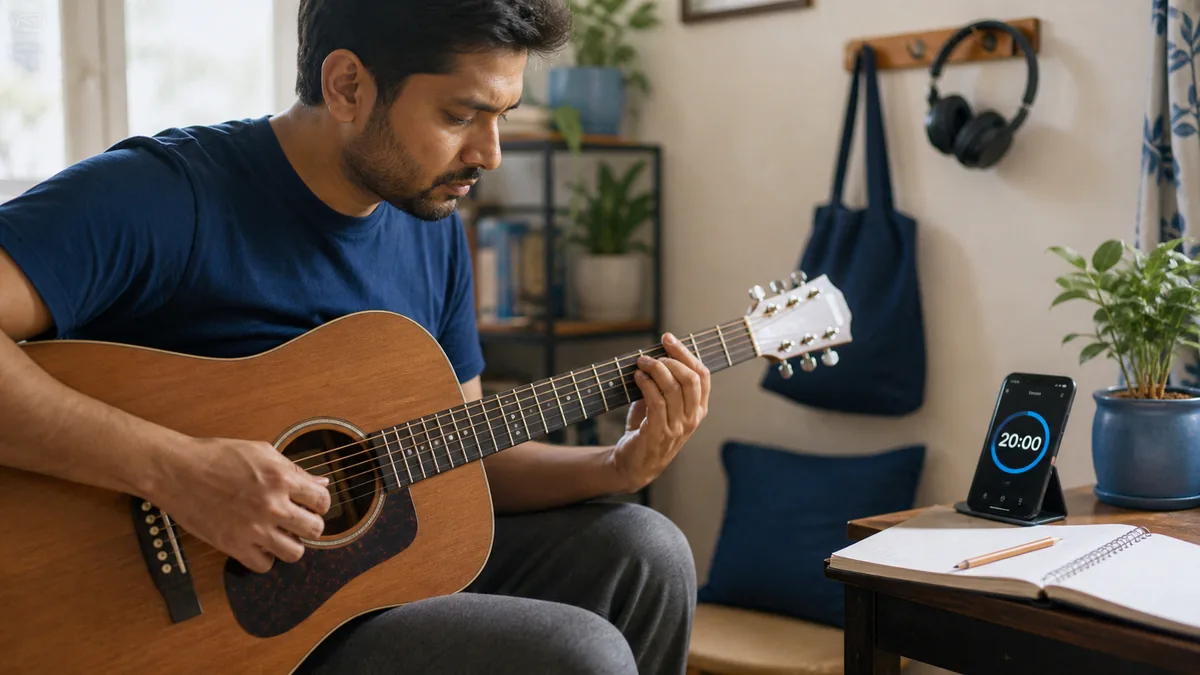
You do not need a free evening to improve at guitar. You need a short routine that is easy to start, specific enough to measure and connected to music you enjoy.
Twenty minutes will not cover everything. That is the point. A narrow session keeps you from spending half the time deciding what to practise.
Minute 0 to 2: tune and settle
Tune every time you play. Then check your shoulders, wrist and grip. If your hands feel tense before the first chord, slow down and reset. A relaxed setup makes the rest of the session more useful.
Minute 2 to 6: controlled warm-up
Choose one simple finger exercise or scale pattern. Play slowly and listen for even notes. The goal is not speed. Use the warm-up to check finger placement and pick control.
If an exercise causes pain, stop. Mild fingertip sensitivity is common for new players, but sharp pain or joint strain is a warning.
Minute 6 to 11: one technical problem
Pick a single weakness. It might be changing from C to G, keeping a barre chord clear or playing an eighth-note strumming pattern without rushing. Work below full speed and count aloud when rhythm is the issue.
Five focused minutes on one change is better than running through ten unrelated exercises.
Minute 11 to 17: use it in a song
Move the same skill into music. Loop the two bars where the problem appears. If the original track is too fast, reduce the tempo or play with a simple drum loop.
Do not restart the whole song every time you make a mistake. That trains the beginning more than the difficult section.
Minute 17 to 20: perform and note the next step
Play one verse, chorus or short study without stopping. Record it if possible. Then write one sentence about the next session, such as "Keep the strumming hand moving during the C to G change."
How to use the routine across a week
- Monday: chord changes and one song section.
- Tuesday: rhythm with a metronome or drum track.
- Wednesday: technique plus a slow play-through.
- Thursday: repeat the weakest section from the recording.
- Friday: perform the full song and review.
When you miss a day
Do not double the next session as punishment. Return to the routine. Consistency survives when missed days are treated as normal interruptions, not proof that the plan has failed.
How a teacher can improve the routine
A teacher can identify the one problem that deserves your attention. Without feedback, beginners often practise what already feels comfortable and avoid the movement that would create the most progress.
Bring a short recording to your lesson. It gives the teacher something concrete to assess and helps turn general advice into a clear task for the week.
Book a live demo and get a practice routine matched to your goals and schedule. Book a free demo
Want a clearer first step?
Meet a mentor, talk about what you want to play and get a learning plan built around your schedule.