10 beginner guitar mistakes that slow down progress
Beginners rarely struggle because they lack talent. Progress usually slows because practice repeats the wrong movement, avoids rhythm or changes direction every few days.
August 20264 min read
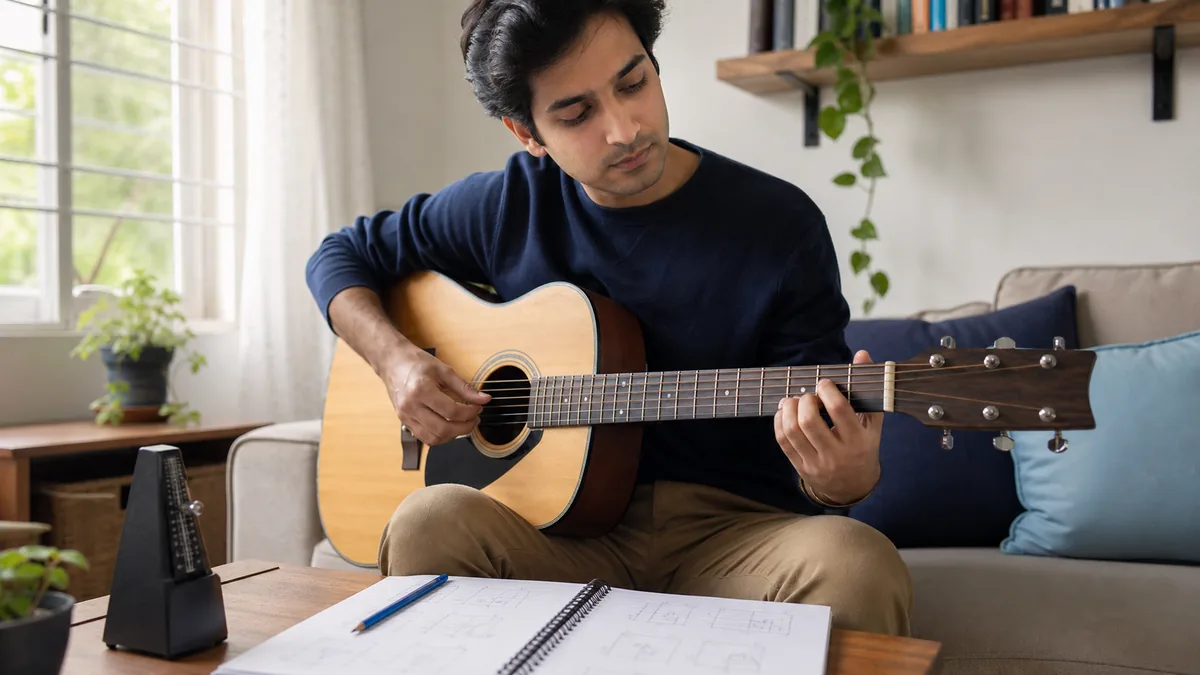
Beginners rarely struggle because they lack talent. Progress usually slows because practice repeats the wrong movement, avoids rhythm or changes direction every few days.
These mistakes are common and fixable. Choose one or two to work on this week instead of trying to repair everything in one session.
1. Pressing much harder than necessary
Extra pressure makes the hand tired and slows chord changes. Place the finger close to the fret, press only until the note is clear and release the tension between attempts.
2. Ignoring tuning
Practising on an out-of-tune guitar trains your ear to accept the wrong sound. Tune before every session and check again if a chord suddenly sounds strange.
3. Stopping the strumming hand during chord changes
Many beginners freeze the right hand while searching for the next chord. Slow the song down and keep the strumming motion steady, even if the left hand arrives late.
4. Playing too fast
Speed can hide uneven timing and unclear notes. Reduce the tempo until you can repeat the part correctly several times. Increase it in small steps.
5. Restarting after every mistake
Music continues after a mistake. Practise finding the beat again. This builds the recovery skill you need for recordings, exams and live playing.
6. Learning only chord shapes
Chords without rhythm do not make a song. Count beats, clap patterns and play with a metronome or drum loop. Timing deserves its own practice.
7. Practising only easy sections
Starting from the first bar feels productive because the beginning gets smoother. Isolate the difficult two bars and repeat them slowly. Then reconnect them to the section before and after.
8. Changing resources every week
One video teaches a chord one way, another uses a different fingering and a third starts a new song. Too many resources create activity without direction. Follow one roadmap long enough to judge it.
9. Using a guitar that is difficult to play
High strings, old strings or poor tuning stability can make normal exercises feel impossible. A basic professional setup can improve playability without buying a new guitar.
10. Measuring yourself against edited performances
Online clips often remove failed takes and slow practice. Compare your playing with your own recording from last month. That is a fairer measure.
A better practice question
Before each session, ask: "What is the smallest part I can improve today?" A clean chord change at sixty beats per minute is a useful target. "Get better at guitar" is not.
Regular teacher feedback can shorten the time between making a mistake and understanding it. That is one reason live lessons often help beginners stay on track.
Book a demo and get direct feedback on the habits affecting your progress. Book a free demo
Want a clearer first step?
Meet a mentor, talk about what you want to play and get a learning plan built around your schedule.