Acoustic or electric guitar for beginners? How to choose in India
Many beginners are told to start on acoustic guitar because it is "basic." That advice is too simple. Your first guitar should match the music you want to play, feel comfortable in your hands and fit the space where you will practise.
August 20264 min read
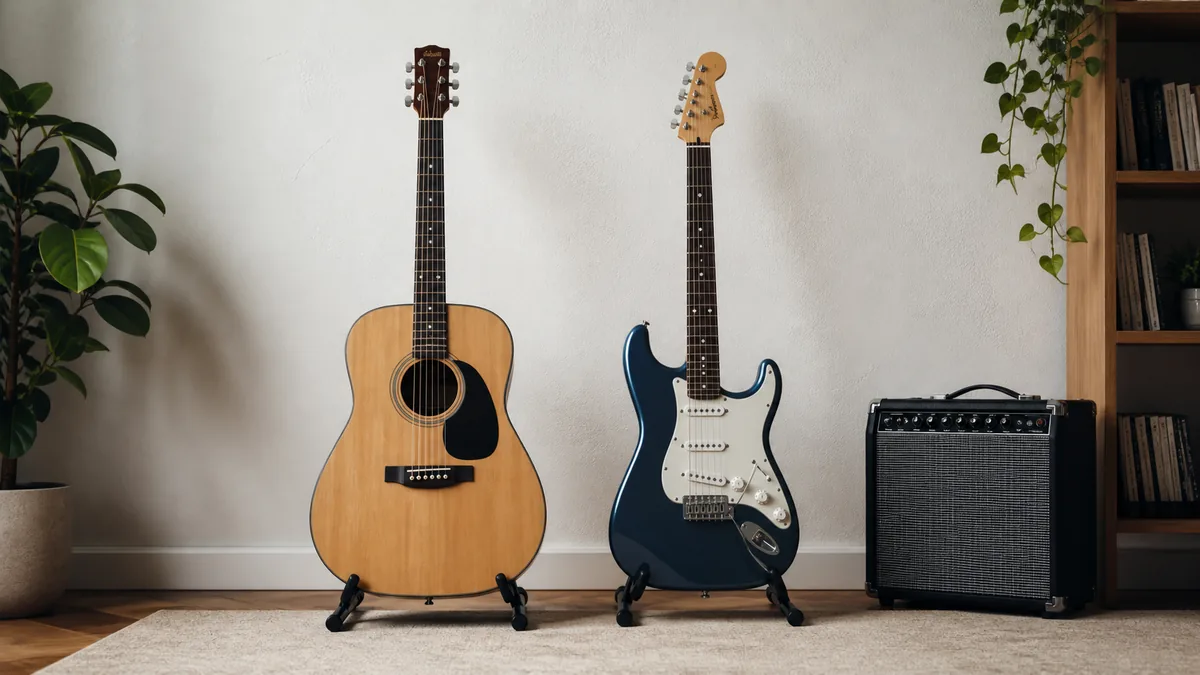
Many beginners are told to start on acoustic guitar because it is "basic." That advice is too simple. Your first guitar should match the music you want to play, feel comfortable in your hands and fit the space where you will practise.
Both acoustic and electric guitars teach timing, chords, scales and musical listening. The better choice is the one that makes you want to pick it up tomorrow.
Choose by music first
If you want to sing along with Bollywood, indie, folk or unplugged songs, an acoustic guitar is a direct fit. If you are drawn to rock riffs, blues leads, metal or effects-driven sounds, an electric guitar may keep you more motivated.
You can play many styles on either instrument, but the sound in your head matters. Motivation is practical, not sentimental. It affects how often you practise.
How they feel
Electric guitars often use lighter strings and can feel easier to press when properly set up. Steel-string acoustics may need more finger pressure. A smaller acoustic body can be more comfortable for children or adults with a shorter reach.
Do not assume a painful guitar is normal. High string action, rough fret edges or a badly shaped neck can make any instrument difficult. Ask a teacher or experienced player to check the setup before you blame your hands.
What else you need to buy
An acoustic guitar is self-contained. Add a tuner, picks, spare strings and a case. An electric guitar also needs an amplifier or headphone setup, an instrument cable and power for any digital equipment.
Compare the full cost, not only the guitar price. A sensible starter setup is better than spending the entire budget on the instrument and using an unreliable cable or uncomfortable strap.
Think about your practice space
An unplugged electric guitar is quiet, and a headphone amplifier can work well in an apartment. An acoustic guitar is louder in the room but does not need cables. If you practise late at night or share a room, this may decide the choice.
What to check in a shop
- Sit with the guitar for at least ten minutes. Check the body size and neck reach.
- Press notes on several frets and listen for buzzing or dead notes.
- Turn every tuning key and check that it moves smoothly.
- Ask whether the shop includes a basic setup.
- Buy from a seller who will help if the instrument develops an early fault.
Avoid buying only by appearance
Colour and shape matter because you should enjoy the instrument. They should not hide poor playability. A beautiful guitar that fights your hands will spend more time in its case.
A simple decision rule
Choose acoustic if you want a portable, direct setup for chords, singing and fingerstyle. Choose electric if your favourite music depends on riffs, lead playing and amplified tone. If you are still unsure, try both during a lesson before buying.
Book a demo with Jam And Play and get help choosing the right first guitar. Book a free demo
Want a clearer first step?
Meet a mentor, talk about what you want to play and get a learning plan built around your schedule.